

This dish was inspired by my grandmother who made Creole meatballs in a rich browning sauce and cream based sauce that had that deep Caribbean Creole influence. I took what she made, played with it, and built something that keeps all of that soul without the dairy. Think Swedish meatballs with a Southern Creole kick. Kids will not know what hit them and adults will be going back for seconds.
Serves 4 | Prep: 20 min | Cook: 35 min | Dairy free
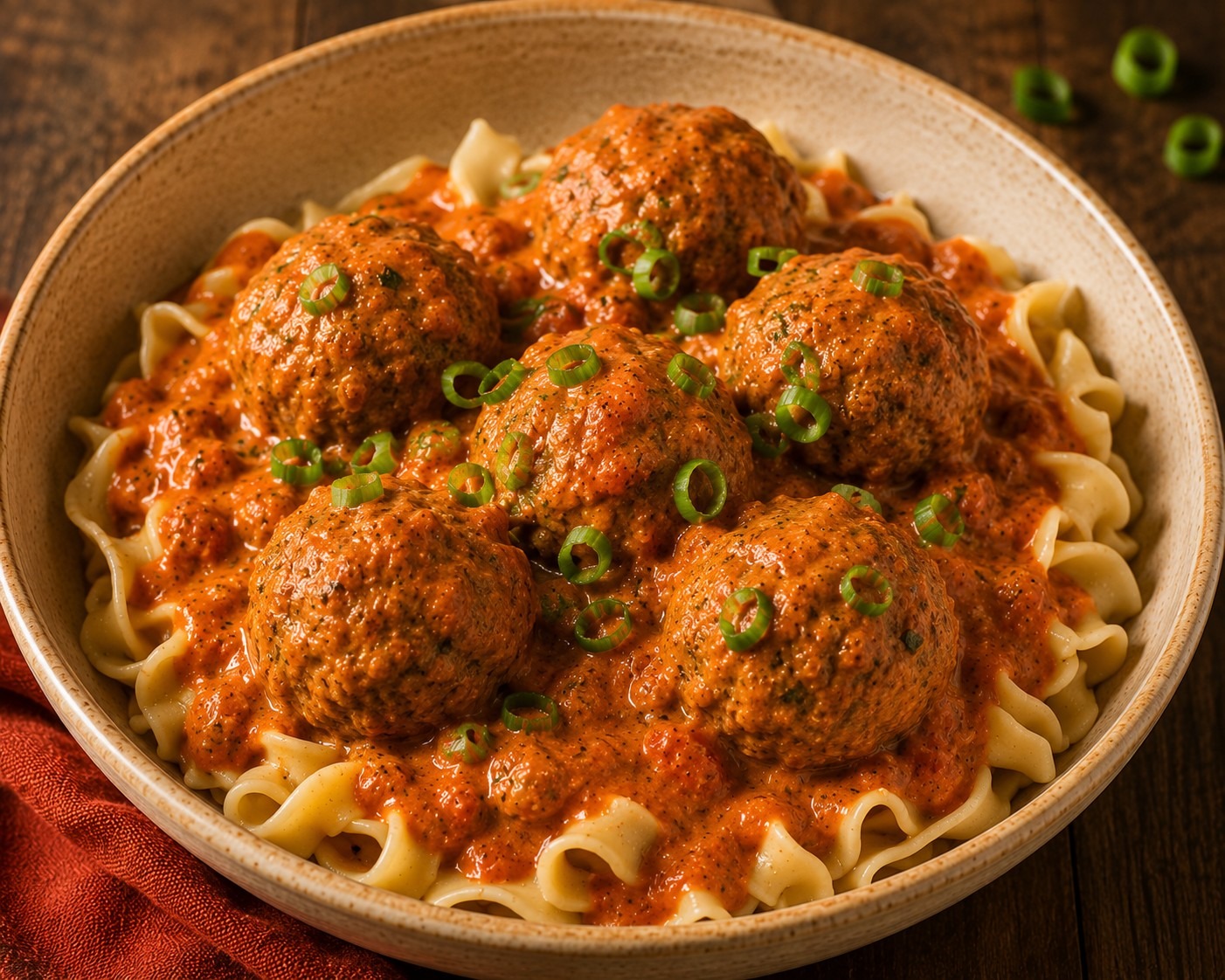
Night before tip: Mix and roll your meatballs the night before and refrigerate. Make your sauce the night before and refrigerate separately. The next day boil your noodles, reheat your sauce, drop your meatballs in and dinner is done in 15 minutes.
Ingredients
MEATBALLS
| 1/2 lb | ground beef |
| 1/2 lb | ground pork |
| 2 slices | bread, crusts removed |
| 1/4 cup | chicken or vegetable broth |
| 2 tbsp | full fat coconut milk |
| 1 | egg, beaten |
| 1 tsp | garlic powder |
| 1 tsp | onion powder |
| 1 tsp | smoked paprika |
| 1/2 tsp | dried thyme |
| 1/2 tsp | black pepper |
| to taste | Goya Adobo — your primary salt source |
For a leaner anti-inflammatory option, substitute ground turkey 93/7 in place of the beef and pork blend. If you cannot find Goya Adobo, any garlic forward all purpose seasoning from your grocery store works here.
CREOLE TOMATO COCONUT MILK SAUCE
|
2 tbsp |
extra virgin olive oil |
|
1 medium |
white onion, diced |
|
3 stalks |
celery, diced |
|
1 medium |
green bell pepper, diced |
|
4 cloves |
fresh garlic, minced |
|
2 tbsp |
tomato paste |
|
1 tbsp |
flour |
|
1 can |
crushed tomatoes, 14 oz |
|
1 can |
full fat coconut milk, 13.5 oz |
|
1 tsp |
smoked paprika |
|
1 tsp |
dried thyme |
|
2 |
bay leaves |
|
pinch |
cayenne pepper |
|
to taste |
Dan-O’s to finish |
If you cannot find Dan-O’s, any Creole seasoning blend from your grocery store works here. Look for one that is herb and garlic forward and low sodium if possible.
TO SERVE
|
12 oz |
egg noodles |
|
to garnish |
fresh green onion, sliced |
For anyone managing Crohn’s or blood sugar, rice noodles or chickpea pasta are great swaps for the egg noodles.
Method
|
MAKE THE MEATBALLS |
|
1. Tear your bread into small pieces and soak in the broth and coconut milk mixture for a few minutes until fully absorbed. Squeeze out any excess liquid and add to your mixing bowl. |
|
This soaking method comes from the Haitian boulet tradition and is what keeps these meatballs tender and moist all the way through. Do not use dry breadcrumbs as a substitute, the texture will not be the same.
|
|
2. Add your ground beef and pork, beaten egg, garlic powder, onion powder, smoked paprika, dried thyme, black pepper, and Goya Adobo to the bowl. Mix everything together with your hands until just combined. Do not overmix or the meatballs will be tough. |
|
Pro tip before you roll: Pinch off a small piece of the mixture and microwave it for 20 to 30 seconds. Taste it. That is exactly how your meatball is going to taste. Adjust your seasoning now before you commit to the whole batch. This is especially important when using seasoning blends that carry sodium.
|
|
3. Roll into golf ball sized portions and set aside on a plate. You should get about 16 to 20 meatballs. |
|
SEAR THE MEATBALLS |
|
1. Heat olive oil in a large deep skillet or Dutch oven over medium high heat. Working in batches so you do not crowd the pan, sear your meatballs on all sides until browned. They do not need to be cooked through at this point, they will finish in the sauce. |
|
Do not move the meatballs while they are searing. Let them sit and develop a crust on each side before turning. That crust is flavor and it is going straight into your sauce.
|
|
2. Remove the meatballs and set aside. Do not wipe out the pan. All of that rendered fat and fond on the bottom is the foundation of your sauce. |
|
BUILD THE SAUCE |
|
1. In the same pan over medium heat add your holy trinity, onion, celery, and green bell pepper. Cook down in all that rendered fat until soft and translucent, about 5 minutes. |
|
2. Add your fresh minced garlic and let it bloom for about a minute until fragrant. |
|
3. Add your tomato paste and let it cook and caramelize for a minute or two, stirring continuously. This step deepens the flavor of the whole sauce so do not rush it. |
|
4. Sprinkle your flour over everything and stir to coat. Cook for another minute to get rid of the raw flour taste. |
|
5. Pour in your crushed tomatoes, scraping up all the fond from the bottom of the pan. Then pour in your coconut milk and stir everything together until the sauce is smooth and combined. |
|
6. Add your smoked paprika, dried thyme, bay leaves, and a pinch of cayenne. Stir to combine and let the sauce come to a gentle simmer. |
|
7. Nestle your meatballs back into the sauce. They should be mostly submerged. Cover and simmer on low for 20 to 25 minutes until the meatballs are cooked through and the sauce has thickened. |
|
The longer this simmers the better it gets. If you have an extra 10 minutes let it go. The meatballs will absorb the sauce and get even more flavorful.
|
|
8. Taste and finish with Dan-O’s as needed. Remove bay leaves. |
|
COOK THE NOODLES AND PLATE |
|
1. While the meatballs are simmering bring a large pot of salted water to a boil. Cook your egg noodles according to package directions. Drain and set aside. |
|
2. Plate your noodles, spoon your meatballs and sauce generously over the top, and finish with fresh sliced green onion. |
A NOTE ON TRADITION AND INFLUENCE
This dish started with my grandmother. She made Creole meatballs in a browning sauce and cream base that had that deep Caribbean Creole soul to it. I took what she made, played with it, and this is where it landed. The soaked bread binder is borrowed from the Haitian boulet tradition, where bread soaked in liquid rather than dry breadcrumbs keeps the meatball tender and moist from the inside out. Haiti and Louisiana share deep cultural and culinary roots through the Caribbean and that connection runs all the way through Creole cooking even when it is not explicitly named. The coconut milk in the sauce carries that same Caribbean thread. This dish is a product of multiple traditions coming together in one pan, which is exactly what Creole cooking has always been.